

10 Things I Got Utterly Wrong About the Happiest Country in the World
Field notes from years of interviewing Danish executives, economists, and expats

I’m what you’d call a Danophile. I love how they respect bikes the way we worship cars. Babies nap outside cafés in their strollers. The concept of hygge. And those persistent top spots on global happiness rankings. I’ve harbored this obsession for over a decade, never missing a chance, despite my husband’s eye rolls, to drop a casual “Well, in Denmark…” into conversation.

It’s not just bikes and coziness–Denmark boasts one of the highest employment rates in the world and is among the most productive workforces. And yet, Danes don’t mimic American burnout culture–nor do they embrace the leisurely sprawl of the French two-hour lunch. I find this paradox so intriguing that I launched a global course called Happiness Blueprint. Each year, I take 20 MBA students to Denmark to explore what makes this country so happy and how we can be a little happier ourselves.
I’ve spent time at Copenhagen Business School and collaborated with EU work/life policy researchers. I’ve interviewed corporate executives, entrepreneurs, and dozens of Danish and expat parents. I’ve been to over 20 workplaces and, still, every time I visit I learn something that challenges my assumptions and worldview.
10 things that I had utterly wrong about Denmark that I needed to see for myself to reframe:
They hate paying taxes. As a business school professor who is in a high-earner income bracket, the idea of giving up more than 50% of my pay is inconceivable. I was sure the Danes would be resentful. But every Dane I’ve interviewed says the same thing: I see my tax dollars at work everyday. Trains run on time. Daycares are excellent. Healthcare is efficient. College is free.

Copenhagen Business School, our partner University, is completely free and students get paid a stipend. Also, it’s visually STUNNING. Danes don’t find meaning in their work. I really did think that the way Danes got their status as one of the happiest countries in the world was by being unattached to their jobs. I was wrong. Most Danes really like their jobs. “I love my job. I am running to work. And I’m also running out of work to my family and to my hobbies.” (BU Head at Ørsted). If you don’t like your job, the job market is flexible and offers retraining via free education.
Some Danes work, others are stay-at-home parents. It took me going to Denmark and meeting with economists to really connect the dots: the Nordic Model works when everybody works. From Professor Caroline de la Porte: “Universal childcare is the economic infrastructure designed to keep parents, especially mothers, in the workforce…so they can contribute to the system.”
77% of Danish women are in the workforce compared to 57% of those in the US. Anecdotally, my Danish economist colleague doesn’t know any stay-at-home parents; I spoke with a Danish mom who had been a stay-at-home parent in LA where they lived for the last 8 years as expats. They’ve since moved back, and she’s working part-time because she said there was no one to hang out with during the day. All of her friends were at work.Innovation will be stifled with a high tax rate. I just don’t see it. In this country of 6 million, which is smaller than the metro-Atlanta area I live in (6.4M), there is Lego, the world’s most successful toy company, Novo Nordisk, the inventor of Ozempic, Ørsted, the world’s biggest offshore wind farm, Maersk, the world’s second biggest container ship company, and Noma, the best restaurant in the world. The proof points are clear; high taxes don’t discourage innovation when those taxes support a system that benefits everyone.

60% of Denmark’s total electricity supply comes from wind power (no greenhouse emissions). National healthcare must suck. As it turns out, traveling through Denmark with 20 college students is an excellent way to test that theory because inevitably, things happen. So far, I’ve had one student break a toe and another develop an eye infection. In both cases, the process is: you call 1813 and speak with a nurse who gets your location. The nurse schedules an appointment near you. In the case of the broken toe, an x-ray was taken on the third floor, and then the student and x-ray were walked to the fourth floor where a doctor was waiting. The doctor examined the x-ray, fit them for a cast, and sent them on their way. The end-to-end process from phone call to cast to back to hotel was under four hours. A month later, the student received a bill for about $250.
The eye infection moved faster since no imaging was required. But the part that truly stunned the student happened in the waiting room. While he waited, a staff member asked if he wanted coffee. He said yes. A few minutes later, they returned with an espresso served in a real ceramic espresso cup. We laughed really hard about how this was too much for our American brains to process. While not a broad sample, these two experiences have challenged my assumption that national healthcare has to suck.Mom is still the default parent. There is still a gap between women in leadership positions and on boards. Where I don’t observe a gap, though, is how Danish dads operate within the family unit. I believe US dads love their kids very much! But, here what I usually see is a dad heading to the park with their kids–awkwardly holding multiple water bottles in their hands. And, it’s like “please, sir, get a bag for those bottles, so you can hold your toddler’s hand while this SUV rips by.”
In Denmark, it's just as common to see dads take the lead. I see dads pushing strollers as much as moms. Dad’s holding the jackets while kids play. I see moms eating at dinner, while dads fix a bootie that fell off. It feels like there is no default parent and instead there are two equal participants.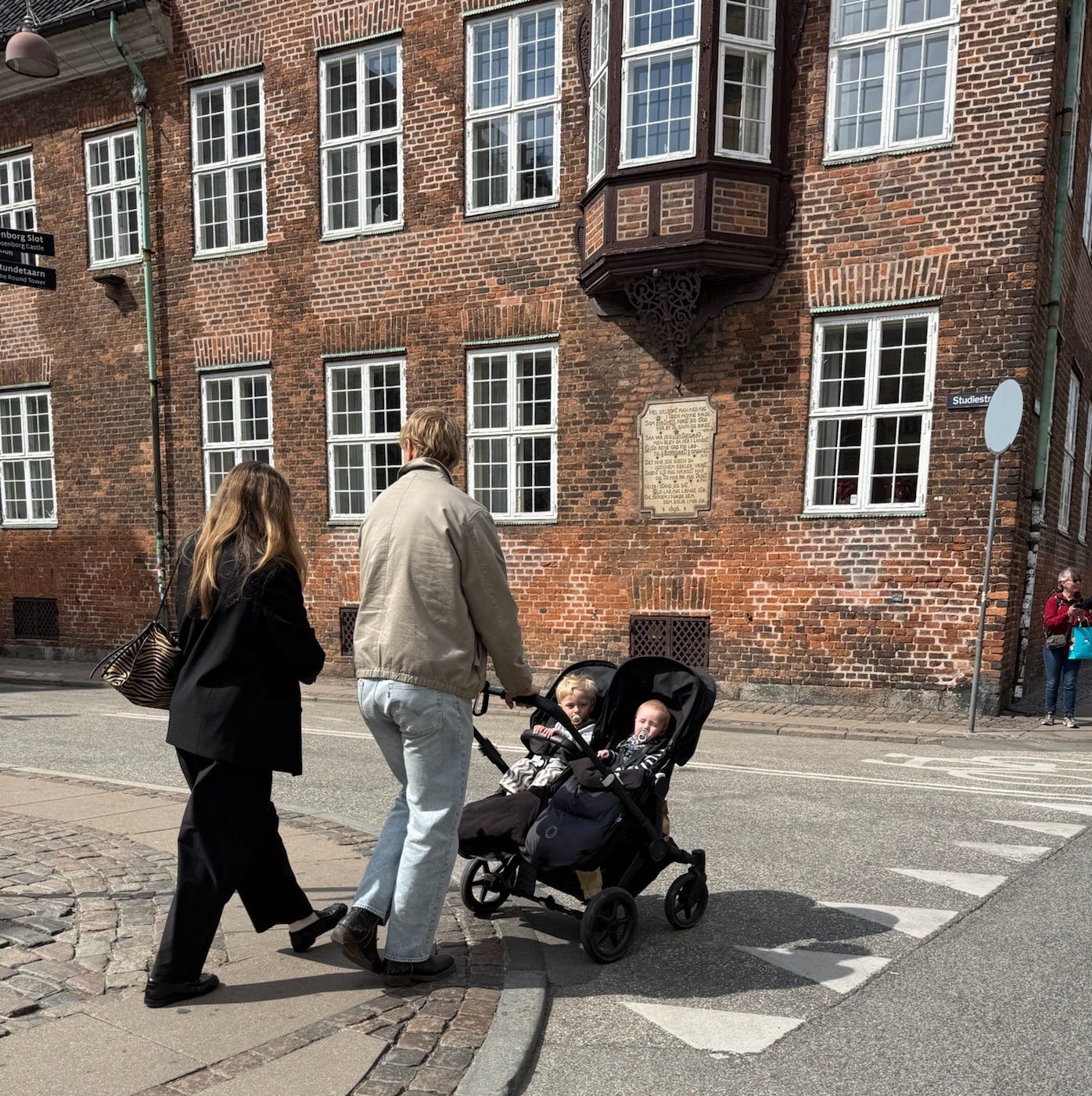
Common scene in Denmark: dads push the strollers while mom walks hands-free. Employees are lazy. This ties back to an American preconceived notion that Europeans are lazy for taking 5 weeks of vacation a year and specifically that Denmark has one of the shortest work weeks in the world (37 hours). After visiting more than 20 Danish workplaces, again, I just don’t see it.
“It’s not the hours that make us great,” shared an SVP at Denmark’s largest bank. Danes operate from the belief that productivity declines as working hours increase, so workplaces are designed around efficiency. Lunch breaks tend to be short, meetings require agendas, and meetings start and end on time.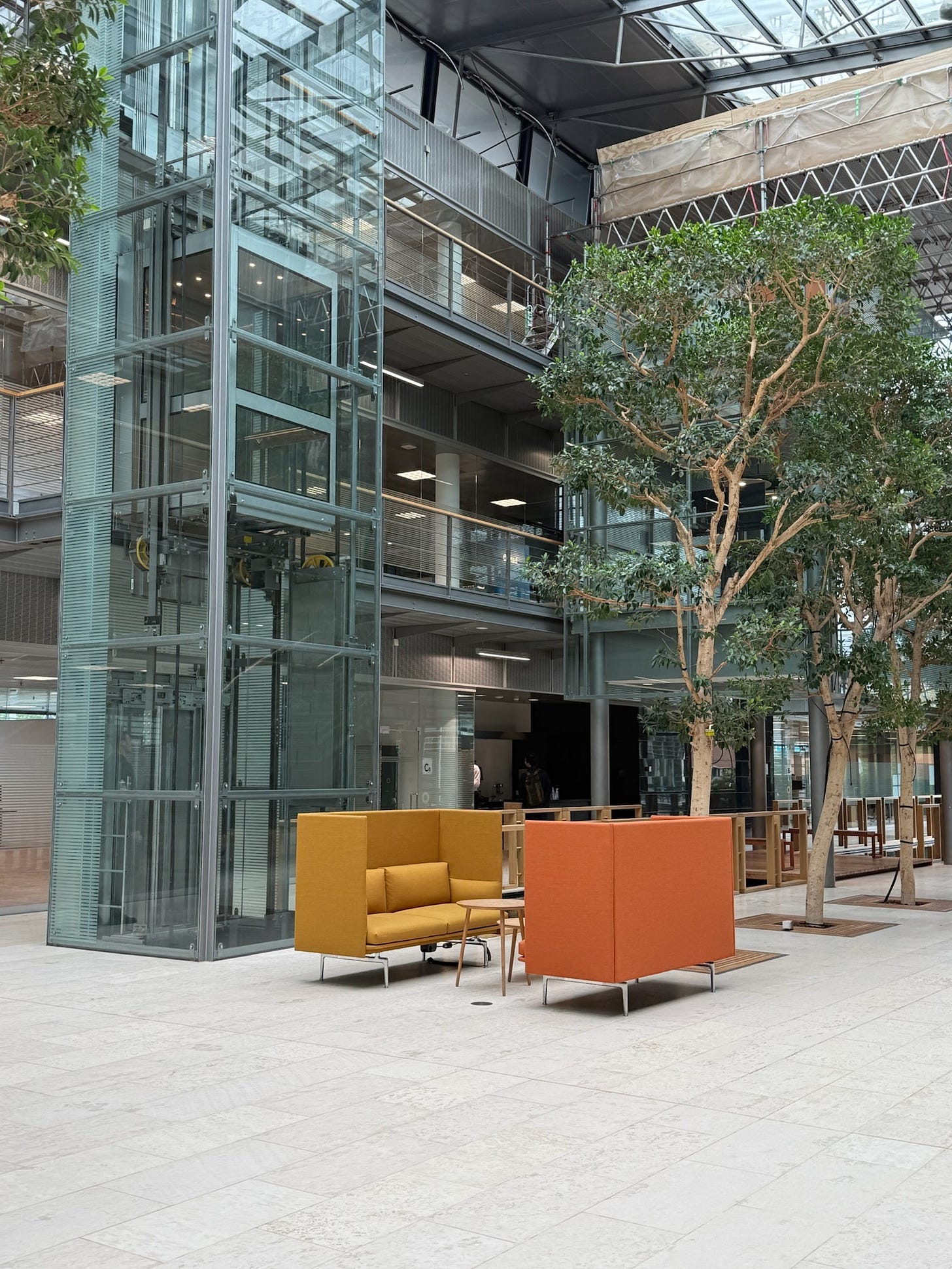
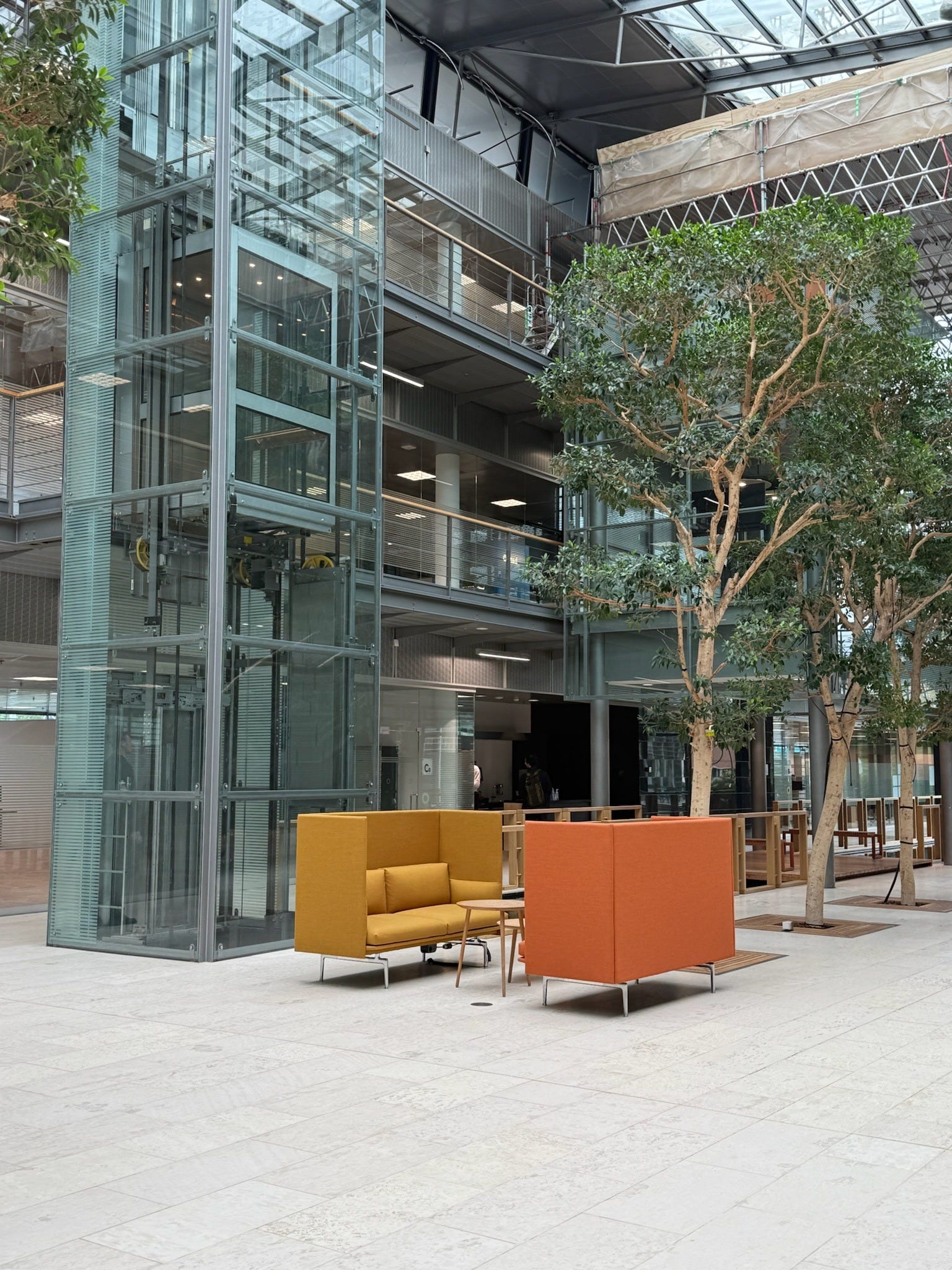
Arbejdsglæde translates to "joy at work" and reflects the importance placed on employee well-being. This impacts everything from how offices are designed (look at this beautiful space!) to how employees take time off—two consecutive weeks are highly encouraged. Hiding failure is a global commonality. Maybe it’s the corporate environments I’ve been in (IBM, The Coca-Cola Company, Merck) but failure is something you blame on someone else. There’s a concept in Denmark called kvajebajer and it means “failure beer,” or if during work hours, failure cake. The person that makes the mistake owns up to it and brings the cake.
I should move to Denmark to be happy. As an immigrant that moved to the US at 8, I’m intimately familiar with feeling like an outsider. Yet, because of the melting pot that is the US, I’m able to maintain my privacy about being said outsider. Denmark is a homogenous place, and while it’s magical to raise kids there, after speaking with Americans who made the move and hearing the realities of expat life, I’ve admitted it would be too difficult to go through immigration again. Instead, I’ve instead decided to import some of the work and life culture norms from Denmark to the US.
Hobbies are something cute that Danes do. You have to know that when I started this research, and pitched Happiness Blueprint in 2023, I had no idea that I would discover hobbies. Watching the Danes have robust third-identities outside of work and parenting changed my life and it will change yours too.
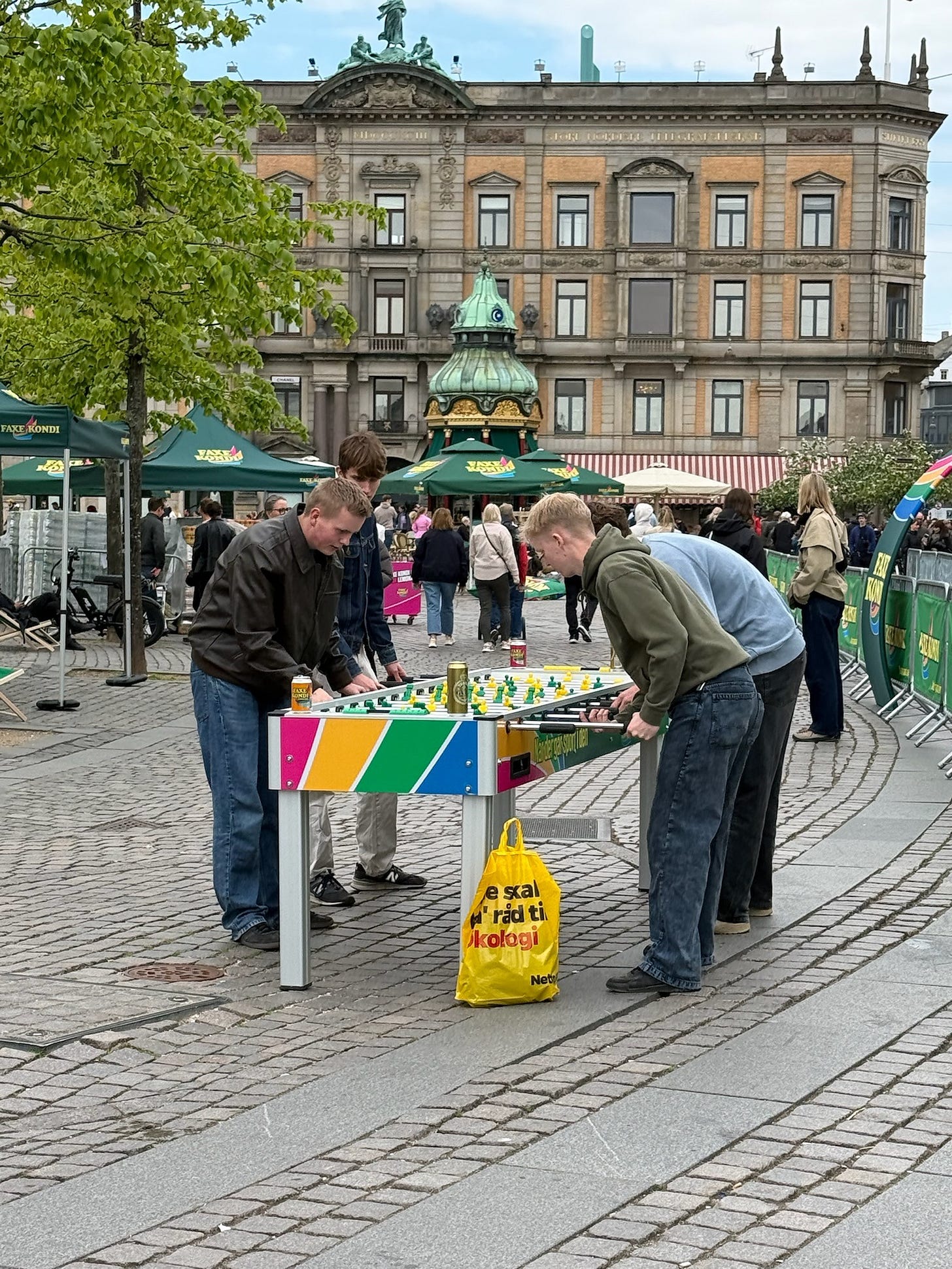
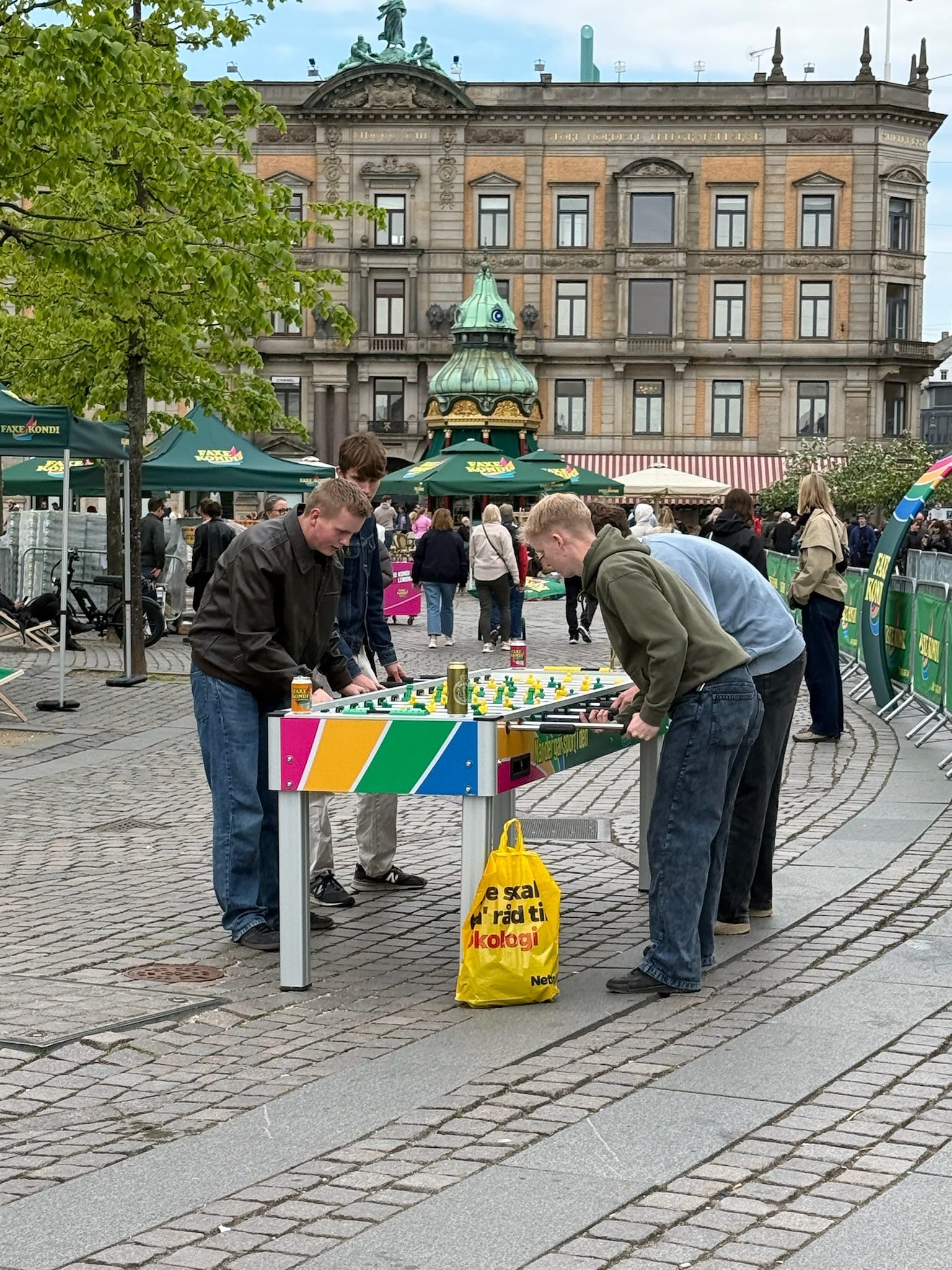
Hobbies & play are encouraged everywhere and for all ages. I saw games both in the street & in the office, group knitting classes, busy ceramics studios, and beekeeping—just to name a few.


Your turn: I’d love to hear which of these assumptions you also held. Did any of this surprise you?
Your friend,

P.S. You can do something to help me that will take you less than 1 second. Please give this post a ❤️ if you found it valuable.

Memorial Day Weekend sales have started to pop up. Best of the best:
Paige is 25% off site wide. My favorite jeans in the whole world are Paige. They are PERFECT if you are petite and so soft you can sleep in them. Other things I love: Alistair dress (for a special event), Rosarita top (for a date night), and as someone that doesn’t like shorts, I do wear these.
Elemis has 25% off site wide. I splurge on the pro-collagen night cream in the summer months when I’m doing sunscreen and AC is blasting. It has a visible effect for me. Our community loves this cleansing balm.
Wayfair is running a sale: I own this rug and this rug and I’m able to save on these because I spend on the rug pad.
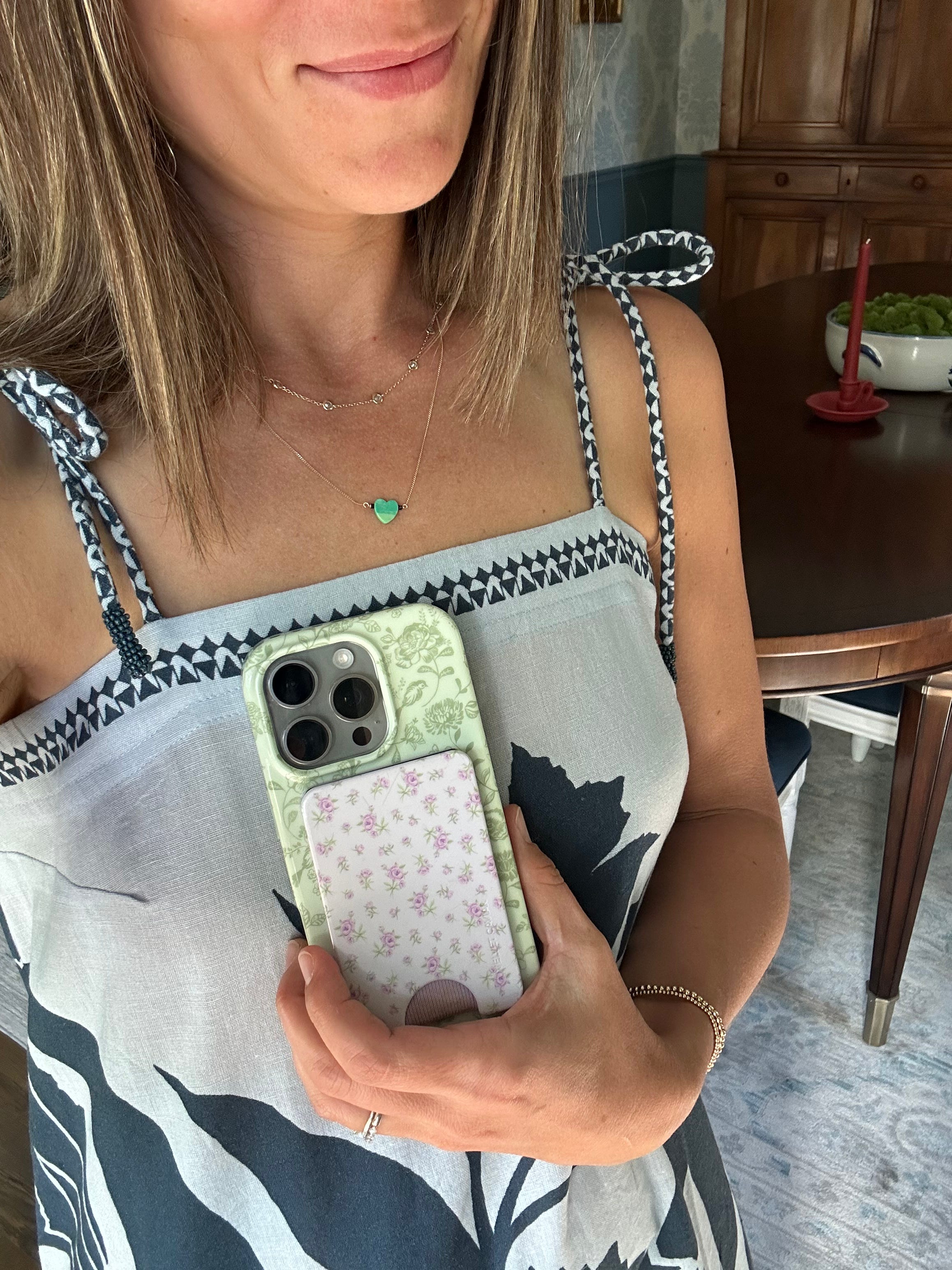
Velvet Caviar has 30% off site wide. I just got this new case to go with the magnetic wallet I already had.
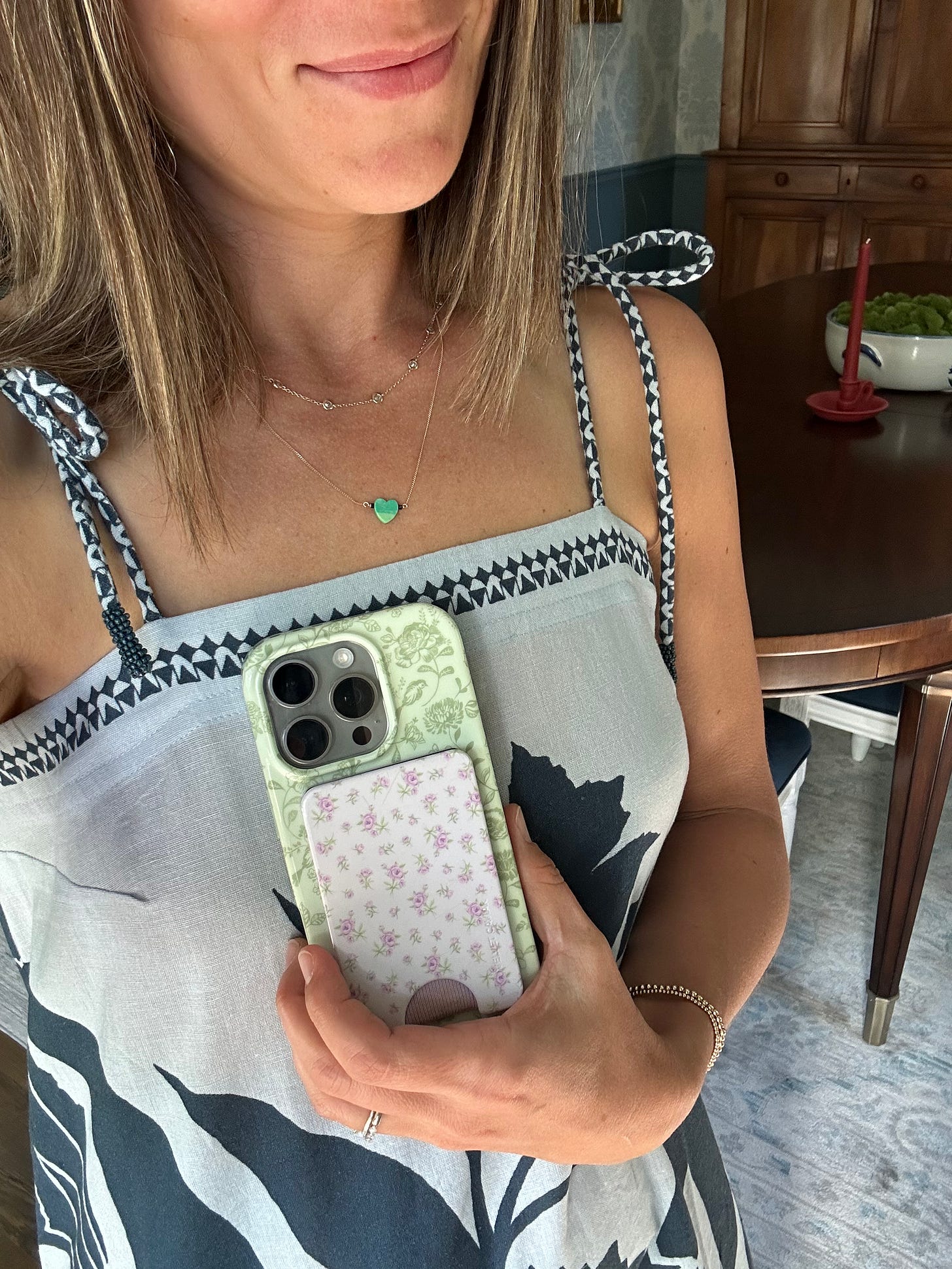
I want to fully own that this little combo is bringing me outsized joy. I do not carry a wallet - just an ID and one card in case Apple Pay isn’t accepted. Ruggable is up to 25% off. My favorite runner is usually not included in sales, but it’s 20% off! The rug I got for my son’s Harry Potter room is also included.

Writing this Substack—nudging our culture away from overworking, overparenting and overconsuming—is the most important work I do. If you believe in this mission too, become a Paid Subscriber.
Weekly paid post
Private community-only comments
My gratitude—you are directly supporting my writing.
This post does contain affiliate links and I may earn a commission if you make a purchase through these links. That supports the work I do, so thank you!
I loved this! I specifically loved the “running to work. And running to home after work”. Both can be true 🩷
I loved reading this, as a bit of a Danophile myself. They have such high confidence in their institutions in a way we just don’t here in America. I personally feel like that has to change before people would be willing to pay the tax rates necessary for this level of service. It’s a chicken and egg problem, I think. My other observation is that it’s an incredibly homogenous society with very little racial and ethnic diversity. You have spent more time there than I have but my impression is that it’s less possible for outsiders to thrive there.
I love that you are trying to bring the best of Danish culture into American workplaces and homes!